
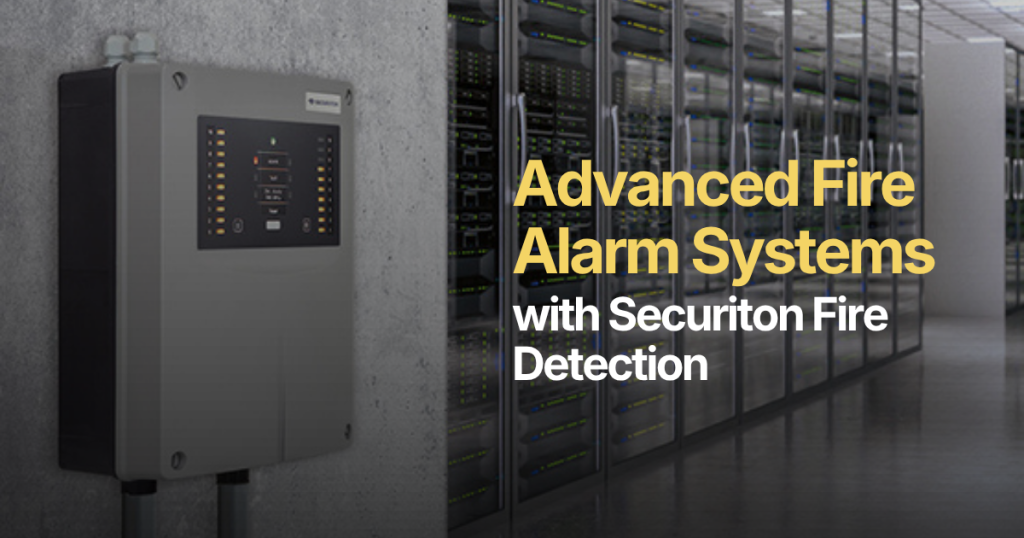
Advanced Fire Alarm Systems with Securiton Fire Detection
Fire Protection Begins with Early Detection
Every fire protection strategy depends on one critical factor: detecting a fire before it becomes a major incident.
Before suppression systems activate, before emergency teams respond, and before evacuation procedures begin, a fire detection system must identify abnormal conditions accurately and without delay. In many facilities, the difference between a minor incident and a major operational disruption is measured in minutes.
As industrial facilities become increasingly automated and operationally complex, advanced fire alarm systems have become a fundamental component of industrial fire safety. Modern detection technologies are no longer designed simply to react to smoke. They are engineered to identify developing fire conditions as early as possible while minimizing nuisance alarms that can disrupt operations.
This is where Securiton Fire Detection technology plays an important role, providing intelligent fire detection solutions for environments where reliability, speed, and operational continuity are essential.
Why Early Fire Detection Matters in Modern Facilities
The Challenge of Complex Industrial Environments
Today’s facilities operate very differently than they did a decade ago.
Industrial plants, data centers, transportation systems, power generation facilities, warehouses, and critical infrastructure assets often operate continuously with extensive automation and limited personnel presence.
At the same time, these facilities contain:
- High electrical loads.
- Sensitive equipment.
- Mission-critical operations.
- Hazardous processes.
- Valuable assets.
- Complex building systems.
A small electrical fault, overheated component, or smouldering cable can escalate rapidly if not detected early.
The objective of modern fire detection is not simply to identify fires after High-Sensitivity Aspirating Smoke Detection (ASD) becomes visible. It is to identify abnormal conditions as early as possible, providing valuable time for intervention before fire growth accelerates.
Understanding Securiton Fire Detection Technology
Detection Designed for Challenging Environments
Securiton has built its reputation on developing highly sensitive fire detection technologies for environments where conventional detection methods may struggle to perform effectively.
Unlike traditional systems that rely solely on basic High-Sensitivity Aspirating Smoke Detection (ASD) or heat detection, Securiton solutions utilize intelligent algorithms, advanced sensing technologies, and continuous environmental analysis to improve detection performance.
The goal is straightforward:
- Detect fires earlier.
- Reduce nuisance alarms.
- Improve operational reliability.
- Support faster emergency response.
This approach is particularly valuable in facilities where production interruptions and false alarms can create significant operational and financial consequences.
Key Capabilities of Advanced Fire Alarm Systems
Modern intelligent fire detection systems offer capabilities that extend far beyond traditional alarm functions.
These capabilities often include:
Intelligent Signal Processing
Advanced algorithms continuously evaluate environmental conditions and detector signals to identify genuine fire indicators while filtering out non-fire events.
Early High-Sensitivity Aspirating Smoke Detection (ASD). Detection
Highly sensitive detection technologies can identify combustion products during the earliest stages of fire development, often before visible High-Sensitivity Aspirating Smoke Detection (ASD). becomes apparent.
Multi-Sensor Detection
Modern systems combine multiple sensing technologies to improve accuracy and reduce the likelihood of false alarms.
Continuous Monitoring
Detection systems operate around the clock, providing real-time supervision of critical environments and infrastructure.
Networked Communication
Integrated communication capabilities allow alarm information to be shared rapidly across facilities, control rooms, emergency response teams, and management systems.
System Integration
Advanced fire alarm systems can communicate directly with industrial fire suppression systems, HVAC controls, emergency shutdown systems, and building management platforms.
Why Intelligent Detection Improves Industrial Fire Safety
Faster Detection Means Faster Response
Response time remains one of the most important factors in fire protection.
The earlier a fire is detected, the more options become available to control the incident before it escalates.
Early detection can help:
- Reduce fire spread.
- Limit equipment damage.
- Improve evacuation effectiveness.
- Support faster emergency response.
- Minimize operational downtime.
- Protect critical assets.
For facilities operating continuously, even a few minutes can significantly influence the outcome of an incident.
Reducing False Alarms Without Compromising Protection
False alarms remain one of the most common challenges in industrial environments.
Dust, humidity, steam, temperature fluctuations, airborne particles, and process emissions can all interfere with conventional detection systems.
Frequent nuisance alarms create unnecessary operational disruptions and may reduce confidence in the detection system itself.
Securiton technology addresses this challenge through intelligent analysis that evaluates multiple indicators before initiating an alarm condition.
The result is a detection strategy that maintains high levels of protection while improving operational reliability.
Detection and Suppression Must Work Together
Fire detection and suppression should never be viewed as independent systems.
The most effective industrial fire protection strategies integrate both technologies into a coordinated response platform.
When a fire condition is confirmed, an advanced detection system may automatically:
- Activate industrial fire suppression systems.
- Initiate evacuation procedures.
- Shut down ventilation systems.
- Isolate hazardous processes.
- Notify emergency response teams.
- Communicate with facility management systems.
This integration improves response speed and helps reduce the potential consequences of fire incidents.
Applications for Advanced Fire Detection Systems
Industrial Facilities
Manufacturing plants often contain multiple fire hazards, including electrical equipment, production machinery, combustible materials, and process-related risks.
Advanced detection technologies help improve visibility across these complex environments.
Data Centers
Data centers require extremely early detection to protect mission-critical infrastructure and maintain operational continuity.
Energy Infrastructure
Power generation facilities, substations, electrical rooms, and utility assets depend on reliable fire detection to support uninterrupted operations.
Transportation Infrastructure
Tunnels, rail facilities, airports, and transportation hubs require detection systems capable of operating reliably under challenging environmental conditions.
Warehouses and Logistics Facilities
Large storage environments present unique challenges due to high ceilings, varying occupancy levels, and extensive inventory storage.
Intelligent detection technologies help improve protection throughout these facilities.
Why Engineering Matters in Fire Detection Design
The effectiveness of a fire alarm system depends on more than the technology itself.
Successful implementation requires:
- Hazard assessments.
- Detector selection studies.
- Environmental evaluations.
- System integration planning.
- Network design.
- Performance testing.
- Long-term maintenance planning.
Different environments require different detection strategies.
A data center, industrial facility, tunnel, warehouse, and power plant each present unique challenges that influence system design.
Engineering ensures that detection technologies are properly aligned with the risks they are intended to address.
Deutschland Technology’s Expertise in Advanced Fire Detection
Deutschland Technology, part of DT Holding, delivers engineered fire detection and fire protection solutions for industrial facilities, energy infrastructure, transportation systems, commercial developments, and critical infrastructure projects worldwide.
Working with advanced technologies such as Securiton Fire Detection, our specialists develop customized solutions based on operational requirements, facility hazards, and business continuity objectives.
Our capabilities include:
- Fire risk assessments.
- Fire detection system design.
- Engineering studies.
- System integration.
- Installation and commissioning.
- Testing and acceptance procedures.
- Maintenance and lifecycle support.
Every solution is developed to align with project requirements, international standards, and operational objectives while supporting long-term reliability and performance.
Fire detection technologies continue to evolve alongside modern facilities.
Developments in multi-criteria sensing, distributed acoustic detection, and AI-assisted analytics are improving detection accuracy and reducing response thresholds. For facility operators, staying ahead of these developments means working with partners who track both technology evolution and the standards that govern its application.
Fire detection systems should be designed in accordance with NFPA 72, the Standard for the National Fire Alarm and Signaling Code.
Conclusion
Effective fire protection begins with detection.
The ability to identify developing fire conditions quickly and accurately remains one of the most important factors influencing safety, asset protection, and business continuity.
Advanced fire alarm systems powered by Securiton Fire Detection technology provide the intelligence, reliability, and responsiveness required to protect modern facilities. By supporting early intervention, reducing nuisance alarms, and integrating seamlessly with industrial fire suppression systems, these technologies help organizations strengthen both industrial fire safety and operational resilience.
Partner with Deutschland Technology
Contact Deutschland Technology to design and implement advanced fire detection solutions tailored to your facility’s operational requirements, compliance obligations, and business continuity objectives.
Deutschland Technology delivers engineered fire protection solutions for the most demanding industrial, energy, transportation, commercial, and critical infrastructure environments across Egypt and the GCC, and worldwide markets.
Frequently Asked Questions
What makes advanced fire alarm systems different from conventional systems?
Advanced systems use intelligent analysis, multiple sensing technologies, and continuous monitoring to provide earlier and more accurate fire detection.
How does Securiton Fire Detection improve fire safety?
Securiton systems utilize advanced detection technologies and intelligent processing algorithms to identify fire conditions quickly while reducing nuisance alarms.
Can advanced fire alarm systems integrate with suppression systems?
Yes. Modern detection systems can communicate directly with industrial fire suppression systems and other building systems to support coordinated emergency response.
Are advanced fire detection systems suitable for industrial facilities?
Yes. They are specifically designed to operate reliably in challenging industrial environments while maintaining high detection performance.
Why is reducing false alarms important?
Reducing nuisance alarms helps minimize operational disruptions, improve confidence in the system, and ensure emergency responses remain focused on genuine incidents.