
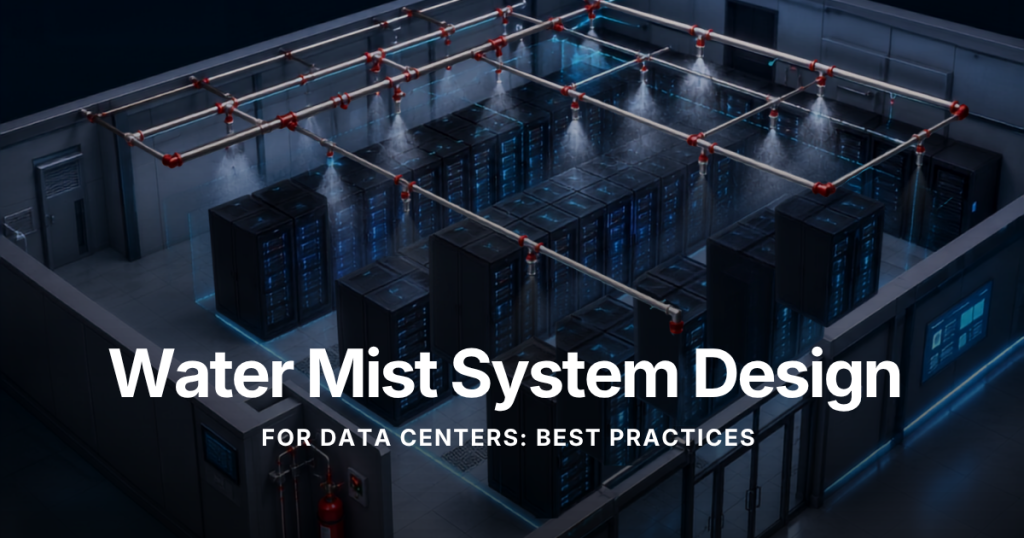
Water Mist System Design for Data Centers: Best Practices
Protecting Mission-Critical Infrastructure from Modern Fire Risks
Data centers support some of the world’s most critical operations. From cloud computing platforms and financial services to healthcare systems and government networks, these facilities process and store vast amounts of essential information every second.
A fire incident inside a data center can result in significant operational disruption, equipment damage, service outages, and substantial financial losses. Effective data center fire safety therefore, requires more than traditional fire suppression methods. It demands engineered solutions that can suppress fires rapidly while minimizing damage to valuable equipment and maintaining business continuity.
This is one reason why operators increasingly adopt advanced water mist technologies as part of their fire protection strategies. When properly designed, a high-pressure water mist system can provide rapid fire suppression while reducing water consumption and limiting collateral damage to critical assets.
Why Fire Protection Requirements Are Changing
The Growing Complexity of Modern Data Centers
Today’s data centers face significantly different risks compared to facilities built a decade ago.
Artificial intelligence applications, high-density computing environments, increased power demands, and the growing use of lithium-ion battery backup systems have introduced new fire protection challenges.
A localized electrical fault that once affected a small section of equipment can now impact densely packed infrastructure supporting thousands of users and critical business operations.
As a result, the data center industry is increasingly adopting advanced fire protection technologies designed to address these evolving risks while supporting operational resilience.
The Cost of Downtime
For many organizations, downtime represents one of the greatest risks associated with fire incidents.
Beyond equipment replacement costs, outages can affect customer service, contractual obligations, regulatory compliance, and business reputation.
This is why modern fire protection for data centers focuses not only on life safety but also on protecting uptime, operational continuity, and critical digital infrastructure.
Why Water Mist Technology Is Ideal for Data Centers
How a High-Pressure Water Mist System Works
Unlike conventional sprinkler systems, a high-pressure water mist system generates extremely fine water droplets under elevated pressure.
These droplets suppress fires through three primary mechanisms:
- Rapid cooling of the fire source.
- Reduction of radiant heat transfer.
- Oxygen displacement through steam generation.
This combination enables efficient fire suppression while using significantly less water than traditional sprinkler systems.
For data centers, this advantage is particularly important because excessive water discharge can damage servers, networking equipment, storage systems, and electrical infrastructure.
Key Benefits for Data Center Fire Suppression
- Reduced Water Damage
Water mist systems use substantially less water than conventional sprinkler systems, helping protect sensitive equipment and reducing recovery costs after an incident.
- Faster Fire Suppression in Critical Areas
Water mist technology performs particularly well in enclosed spaces such as server rooms, electrical rooms, UPS facilities, and battery storage areas.
- Improved Asset Protection
The combination of rapid cooling and limited water discharge helps preserve critical infrastructure while controlling fire growth.
- Enhanced Business Continuity
Reduced cleanup requirements and lower equipment damage can help organizations restore operations more quickly following a fire event.
- Compliance with International Standards
Water mist systems can be designed in accordance with NFPA 750, NFPA 75, NFPA 76, and FM Approvals requirements for mission-critical facilities.
Best Practices for Water Mist System Design
Conduct a Detailed Fire Risk Assessment
Every data center presents unique hazards.
A comprehensive assessment should evaluate:
- Server room configurations.
- Rack density.
- Electrical infrastructure.
- UPS systems.
- Battery energy storage areas.
- Raised floor environments.
- Cable management systems.
- Cooling infrastructure.
This assessment forms the foundation of an effective water mist system design.
Integrate Early Fire Detection Technologies
Fire detection remains one of the most important elements of a comprehensive protection strategy.
Advanced aspirating smoke detection (ASD) systems can identify smoke particles during the earliest stages of fire development, enabling rapid response before significant damage occurs.
When integrated with water mist suppression systems, these technologies provide multiple layers of protection.
Protect Hidden Risk Areas
Many fires originate outside the server hall itself.
Common high-risk areas include:
- Underfloor cable spaces.
- Ceiling voids.
- Electrical switchgear rooms.
- UPS facilities.
- Lithium-ion battery rooms.
- Power distribution equipment.
A complete design must address all critical spaces rather than focusing solely on visible equipment.
Design for Scalability
Data centers evolve continuously.
New racks, expanded power systems, AI workloads, and increased computing density can alter fire protection requirements over time.
A scalable design helps ensure that protection remains effective as facility demands grow.
Hydraulic Design and System Zoning
Hydraulic performance is fundamental to reliable high-pressure water mist protection. Engineers must verify that operating pressures, nozzle performance characteristics, and discharge densities remain within the parameters established by the system’s fire test approvals.
This is particularly important in large data centres where multiple protection zones draw water from a common supply. Proper system zoning ensures suppression is delivered only where needed while limiting disruption to adjacent operational areas.
Effective zoning strategies also support maintenance activities, system expansion, and phased facility growth without compromising protection performance. As data center campuses continue to expand, hydraulic design becomes increasingly important in ensuring consistent suppression capabilities throughout the facility.
- Addressing Emerging Data Center Fire Risks
Lithium-Ion Battery Protection
Many modern data centers rely on lithium-ion batteries for backup power.
While these systems improve operational efficiency, they also introduce thermal runaway risks that require specialized fire protection measures.
Water mist technology can play a valuable role in cooling battery systems and limiting heat propagation when incorporated into a broader fire protection strategy.
AI and High-Density Computing
The rapid growth of artificial intelligence infrastructure is increasing heat generation and power demands within data centers.
These environments require suppression technologies capable of responding quickly to rapidly developing fire scenarios while minimizing damage to critical systems.
How Deutschland Technology Supports Data Center Fire Safety
Deutschland Technology delivers engineered fire protection solutions for mission-critical environments where uptime, reliability, and asset protection are essential.
Our team designs and implements advanced water mist systems that comply with NFPA standards, FM Approvals guidance, and international best practices.
Every project begins with a detailed evaluation of:
- Operational requirements.
- Fire hazards.
- Regulatory obligations.
- Business continuity objectives.
- Future expansion plans.
Whether protecting server halls, battery energy storage systems, UPS rooms, electrical infrastructure, or entire data center campuses, Deutschland Technology develops customized solutions designed for long-term performance and reliability.
By combining advanced high-pressure water mist system technology with engineering expertise, we help operators strengthen fire protection while supporting uninterrupted operations.
Deutschland Technology, part of DT Holding, delivers engineered fire protection solutions for mission-critical environments where uptime, reliability, and asset protection are essential.
Dr. Mohamed Sorour, CEO of Deutschland Technology, serves as a Principal Special Expert on the NFPA 750 Technical Committee, the international standard governing water mist system design. This involvement provides our engineering teams with direct insight into the development of globally recognized water mist standards and best practices.
Conclusion
Data centers require fire protection solutions that do more than extinguish fires. They must protect critical infrastructure, support business continuity, minimize equipment damage, and adapt to evolving operational demands.
A properly engineered water mist system design provides an effective approach to achieving these objectives. By combining rapid fire suppression, reduced water usage, and advanced engineering practices, water mist technology continues to play an increasingly important role in modern data center fire protection.
Protect Your Critical Infrastructure with Deutschland Technology
Contact Deutschland Technology to design and implement advanced water-mist fire protection systems tailored for data centres, critical infrastructure, power systems, and mission-critical facilities.
Deutschland Technology delivers engineered fire protection solutions for the most demanding technology, industrial, energy, and critical infrastructure environments across Egypt, the GCC, and worldwide markets.
Frequently Asked Questions
Why is water mist preferred for data centers?
Water mist systems provide effective fire suppression while using significantly less water, helping reduce damage to sensitive electronic equipment.
What standards apply to data center fire protection?
Common standards include NFPA 75, NFPA 76, NFPA 750, and FM Approvals guidance for critical infrastructure protection.
Can water mist systems protect battery rooms?
Yes. Properly engineered water mist systems can help control battery-related fire risks and support thermal management during fire incidents.
What is a high-pressure water mist system?
A high-pressure water mist system uses specialized nozzles and elevated operating pressures to generate ultra-fine droplets that suppress fire through cooling and oxygen displacement.
Why are advanced fire protection systems important for AI data centers?
AI facilities operate with higher power densities and increased heat loads, requiring specialized fire protection strategies that can respond rapidly while protecting critical infrastructure.