
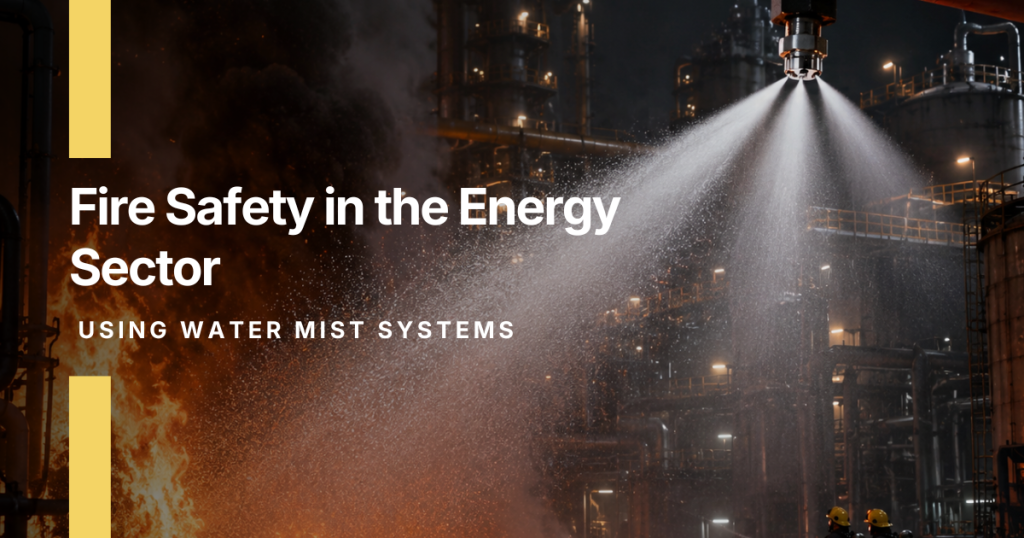
Fire Safety in the Energy Sector Using Water Mist Systems
Safeguarding Critical Infrastructure from Unseen Threats
The energy sector is the backbone of modern economies, encompassing power plants, oil & gas facilities, refineries, and substations that operate under highly demanding conditions. However, this critical infrastructure is continuously exposed to significant fire risks. Electrical faults, overheating equipment, and the presence of flammable fuels can escalate rapidly into major incidents, threatening operations, human safety, and the environment.
To mitigate these risks, the energy sector is increasingly adopting advanced fire protection technologies that go beyond conventional approaches. According to data from the National Fire Protection Association (NFPA), industrial fires account for substantial financial losses, with billions in property damage globally. This highlights the urgent need for highly efficient fire suppression solutions that not only extinguish fires rapidly but also minimize operational disruption and asset damage.
The Evolving Landscape of Energy Fire Risks
Beyond Conventional Protection for a Dynamic Industry
Energy facilities operate in complex environments characterized by high-voltage systems, combustible materials, and confined or remote locations. These conditions demand specialized fire protection in oil and gas industry applications that exceed the capabilities of traditional suppression systems.
Conventional methods such as foam and CO₂ systems remain effective in specific scenarios but introduce operational challenges. Foam systems can result in extensive cleanup and potential contamination of sensitive equipment, while CO₂ systems pose safety risks in occupied spaces. In high-value environments, fire protection strategies must balance suppression performance with asset preservation and personnel safety.
This has driven a shift toward more precise and engineered fire suppression technologies that can respond effectively without introducing secondary risks.
Water Mist Systems: Precision, Efficiency, and Minimal Impact
A Smarter Approach to Fire Suppression
Water mist technology represents a significant advancement in fire protection engineering. A high-pressure water mist system operates by discharging ultra-fine water droplets that rapidly cool flames, displace oxygen, and reduce radiant heat. This multi-mechanism suppression approach ensures fast and efficient fire control using significantly less water than traditional systems.
The result is faster suppression, minimal water damage, and improved protection of critical assets. This is particularly important in energy environments where water exposure can be as damaging as fire itself.
Systems designed in accordance with international standards such as NFPA and certified under FM Approvals demonstrate proven reliability and performance in high-risk industrial applications. Additionally, studies from FM Global indicate that high-pressure water mist systems can reduce water consumption by up to 90% while maintaining or exceeding suppression efficiency compared to conventional sprinkler systems.
These advantages make water mist an ideal solution for confined industrial environments, where rapid response and minimal collateral damage are essential.
Targeted Protection: From Transformers to Fuel Storage
Tailored Solutions for High-Risk Assets
Water mist systems provide highly effective, targeted protection across critical components within the energy sector:
Transformer Fire Protection System
Transformers contain flammable insulating oils and are highly susceptible to electrical faults. A high-pressure water mist system provides rapid cooling and fire suppression, reducing the risk of explosion and preventing fire spread while minimizing damage to surrounding equipment.
Fire Protection for Fuel Storage Tanks
Fuel storage tanks represent a major fire hazard due to the large volumes of combustible materials. Water mist systems help cool tank surfaces, suppress vapor ignition, and reduce the risk of escalation, offering a reliable layer of protection for large-scale storage facilities.
Electrical Fire Suppression Systems for Control Rooms and Generators
Control rooms and generator systems are critical to operational continuity. Water mist systems are ideal for these environments due to their low water usage and rapid suppression capabilities, ensuring protection without damaging sensitive electronics or causing extended downtime.
In real-world applications, a localized high-pressure water mist system can suppress fires at their early stages, allowing operations to resume quickly with minimal disruption—an essential advantage in high-value energy operations.
Engineering Safer Energy Environments with Deutschland Technology
Deutschland Technology delivers engineered fire protection solutions tailored to the complex demands of the energy sector. By combining advanced technologies with deep industry expertise, the company designs and implements high-performance electrical fire suppression systems that meet international standards and project-specific requirements.
From transformer fire protection system installations to comprehensive fire protection for fuel storage tanks, each solution is developed to ensure maximum reliability, safety, and operational efficiency. All systems are aligned with globally recognized standards such as NFPA and FM Approvals, ensuring compliance and performance in the most demanding conditions.
Conclusion
As fire risks in the energy sector continue to evolve, adopting advanced suppression technologies is no longer optional—it is essential. High-performance solutions such as the high-pressure water mist system provide a critical balance between rapid fire suppression, reduced water damage, and operational continuity.
Deutschland Technology delivers engineered fire protection solutions for the most demanding energy environments across Egypt and the GCC.
Contact Deutschland Technology to design and implement advanced water mist fire protection systems tailored for oil & gas, power generation, and critical energy infrastructure.